When you need to remove stubborn bolts or nuts, a powerful impact gun is your best friend. These tools use rapid rotational impacts to loosen fasteners that regular wrenches can’t budge. For mechanics, DIYers, and anyone working with heavy machinery, having the right impact gun is crucial. But with so many options, which one is the strongest 1-inch impact gun available?
The term “strongest” can mean a few things. It usually refers to the tool’s torque output, measured in foot-pounds (ft-lbs) or Newton-meters (Nm). Higher torque means more power to break loose tight fasteners. However, other factors like durability, speed (RPM), and ergonomics also play a role in how effective a tool is in real-world use. This guide will explore the top contenders for the strongest 1-inch impact gun, helping you make an informed decision for your toughest jobs.
Understanding Impact Gun Power: Torque And Beyond
Before diving into specific models, it’s essential to understand what makes an impact gun powerful. The primary metric is torque. This is the rotational force the tool can deliver. For 1-inch impact guns, we’re looking at heavy-duty tools designed for commercial and industrial applications, where torque figures can reach well over 1,000 ft-lbs, and sometimes much higher.
Torque Ratings: What Do They Mean?
Impact guns have two main torque ratings:
- Tightening Torque: This is the torque the tool applies when tightening a bolt. It’s usually lower than the breaking torque.
- Breaking Torque (or Loosening Torque): This is the maximum torque the tool can deliver to *loosen* a bolt. This is the figure most people refer to when asking about the “strongest” impact gun. For 1-inch models, you’ll often see breaking torque figures ranging from 1,000 ft-lbs up to 2,500 ft-lbs or even more.
It’s important to note that manufacturers often list peak breaking torque. This is the absolute maximum the tool can achieve for a very brief moment. In practical use, especially with continuous use or when dealing with fasteners that are extremely rusted or seized, the average working torque might be more relevant, though less commonly advertised.
Beyond Torque: Other Power Indicators
While torque is king, other specifications contribute to an impact gun’s overall capability:
- Impacts Per Minute (IPM): This measures how many times the hammer mechanism strikes per minute. A higher IPM generally means faster loosening of fasteners, but it’s the force behind each impact (related to torque) that truly matters.
- Revolutions Per Minute (RPM): This indicates how fast the anvil spins. Higher RPM can speed up the process of running a bolt in or out once it’s loose.
- Air Consumption (CFM): For pneumatic (air-powered) tools, this is crucial. A powerful gun needs a robust air supply. If your compressor can’t keep up, the tool won’t perform at its best.
- Weight and Ergonomics: A powerful tool can be heavy. Good weight distribution, comfortable grips, and vibration reduction are vital for prolonged use and preventing fatigue.
- Durability: Industrial-grade tools are built to withstand harsh environments and heavy use. Materials, build quality, and the hammer mechanism design all impact longevity.
Top Contenders For The Strongest 1-inch Impact Gun
Finding the absolute “strongest” can be a moving target as manufacturers release new models. However, several brands consistently produce heavy-duty 1-inch impact guns known for their immense power and reliability. These are typically found in professional garages, heavy equipment repair shops, and industrial settings.
1. Ingersoll Rand 2150max
Ingersoll Rand is a titan in the industrial tool market, and their 2150MAX is a prime example of their commitment to power and performance. This pneumatic impact gun is engineered for the most demanding tasks.
- Torque: The 2150MAX boasts an impressive 1,500 ft-lbs of loosening torque. This is more than enough for most heavy-duty applications, including large truck lug nuts, agricultural equipment, and construction machinery.
- Features: It features a twin hammer mechanism for maximum power and durability. The silenced exhaust helps reduce noise pollution in the workshop. It also includes a one-hand forward/reverse lever, making it easy to switch directions without taking your hand off the tool.
- Durability: Built with a hard-hitting hammer mechanism and a robust housing, the 2150MAX is designed to withstand the rigors of professional use.
- Air Requirements: This tool requires a significant air supply, typically around 8 CFM at 90 PSI. This means you’ll need a powerful air compressor to get the most out of it.
2. Snap-on Mg7250
Snap-on is another brand synonymous with professional-grade tools, known for their quality and performance. The MG7250 is their heavy-hitter in the 1-inch category.
- Torque: The MG7250 delivers a formidable 1,450 ft-lbs of breaking torque. This places it squarely in the top tier for raw power among 1-inch impact guns.
- Features: It utilizes a high-performance twin hammer mechanism for consistent power delivery. The variable speed trigger allows for precise control, and the one-handed forward/reverse selector is conveniently located. It also boasts a long barrel which can be beneficial for reaching deeply recessed fasteners.
- Ergonomics: Snap-on tools are often praised for their comfort. The MG7250 features an ergonomic grip and balanced design to reduce user fatigue during long jobs.
- Air Requirements: Similar to other high-power 1-inch tools, the MG7250 requires substantial airflow, generally around 8-10 CFM at 90 PSI.
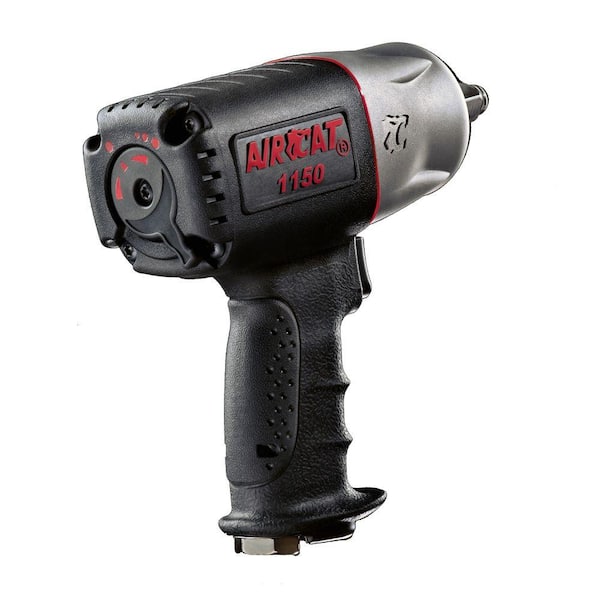
3. Aircat 1000xl-3
Aircat has carved out a niche by focusing on high-performance tools with a strong emphasis on noise reduction. The 1000XL-3 is their powerful 1-inch offering.
- Torque: This impact gun delivers a substantial 1,295 ft-lbs of loosening torque. While slightly lower than some competitors on paper, Aircat tools are known for their practical, usable power.
- Features: A key feature is its “hard-hitting” twin hammer mechanism. Aircat also emphasizes its “quiet technology”, significantly reducing the noise level compared to many other high-torque tools, making it more comfortable for extended use in a workshop environment. It includes a variable speed trigger and a one-handed reverse lever.
- Durability: Constructed with a hardened steel body and a reinforced hammer mechanism, the 1000XL-3 is built for durability.
- Air Requirements: It operates on a standard 90 PSI air pressure and requires around 8 CFM.
4. Chicago Pneumatic Cp7782-6
Chicago Pneumatic (CP) is a well-respected name in industrial air tools, offering a balance of power, durability, and value. The CP7782-6 is a popular choice for heavy-duty applications.
- Torque: This tool provides a strong 1,190 ft-lbs of loosening torque. It’s a workhorse capable of handling tough jobs on trucks, buses, and heavy machinery.
- Features: It features a dual hammer mechanism for reliable power. The 360-degree adjustable exhaust directs air away from the user, and the contoured grip enhances comfort. The power regulator allows for fine-tuning the output.
- Durability: CP tools are known for their robust construction, and the CP7782-6 is no exception, designed for frequent use in demanding environments.
- Air Requirements: Similar to others in its class, it requires a substantial air supply, typically 8 CFM at 90 PSI.
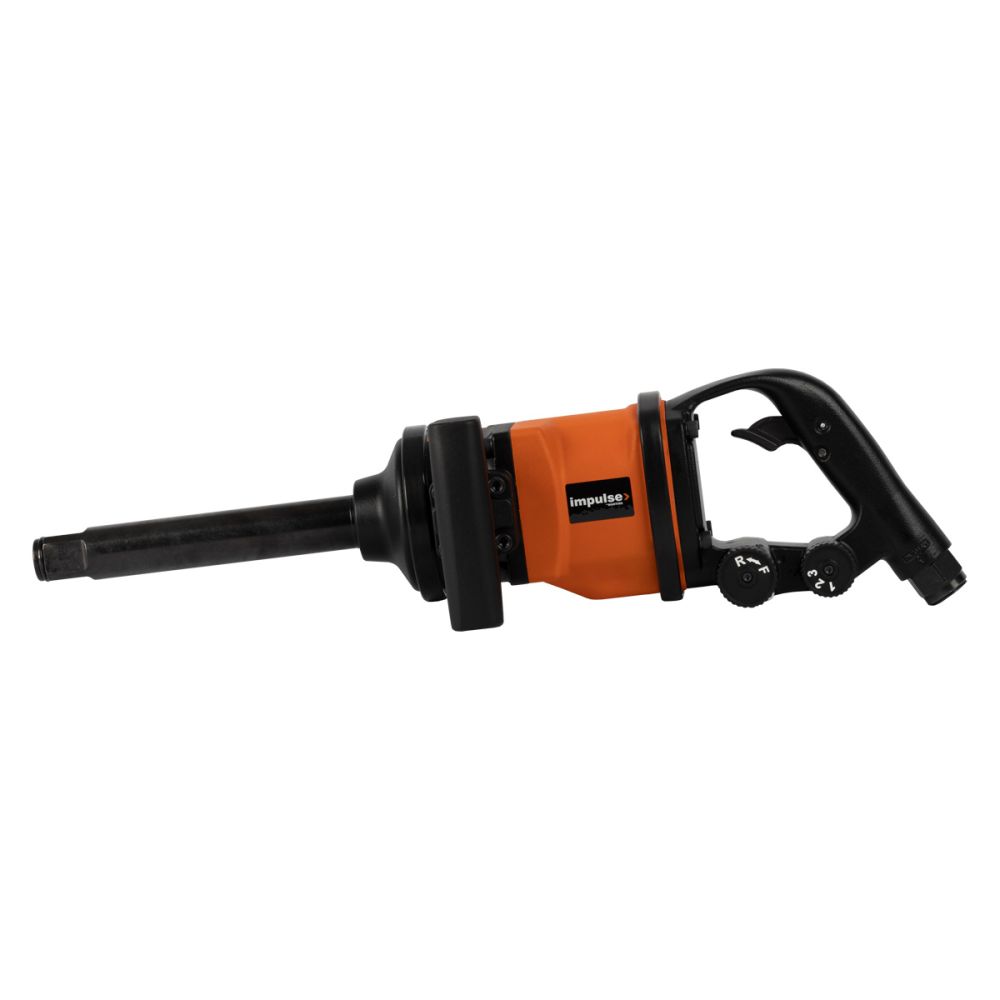
5. Mac Tools 1″ Impact Wrench (e.g., Am750)
Mac Tools, another professional brand, offers powerful 1-inch impact wrenches designed for heavy-duty service. While specific model numbers can vary and be updated, tools like the AM750 represent their commitment to high torque and durability.
- Torque: These models typically offer over 1,000 ft-lbs of loosening torque, often reaching into the 1,200-1,400 ft-lbs range depending on the exact configuration. They are built to break free stubborn fasteners found on large vehicles and equipment.
- Features: Expect a twin hammer design for consistent power, a variable speed trigger, and a one-handed forward/reverse control. Mac Tools often focuses on user comfort with ergonomic grips and balanced weight distribution.
- Durability: Built with high-quality materials to withstand the harsh conditions of professional automotive and industrial repair.
- Air Requirements: Like its competitors, this class of tool demands a robust air system, usually needing 8 CFM or more at 90 PSI.
Credit: martinsindustries.com
Comparing The Giants: Key Specifications
To help visualize the differences, here’s a comparison of some of the top 1-inch impact guns. Remember that specifications can be updated, so always check the latest manufacturer data.
| Feature | Ingersoll Rand 2150MAX | Snap-on MG7250 | Aircat 1000XL-3 | Chicago Pneumatic CP7782-6 |
|---|---|---|---|---|
| **Max Loosening Torque** | 1,500 ft-lbs | 1,450 ft-lbs | 1,295 ft-lbs | 1,190 ft-lbs |
| **Mechanism** | Twin Hammer | Twin Hammer | Twin Hammer | Dual Hammer |
| **Average CFM** | 8 CFM | 8-10 CFM | 8 CFM | 8 CFM |
| **RPM** | ~6,000 RPM | ~5,500 RPM | ~6,000 RPM | ~5,000 RPM |
| **Features** | Silenced Exhaust, One-Hand Reverse | Variable Speed, Long Barrel | Quiet Tech, Variable Speed | Adjustable Exhaust, Power Regulator |
| **Weight** | ~7.5 lbs | ~7.0 lbs | ~7.0 lbs | ~8.0 lbs |
*Note: Specifications are approximate and can vary by model revision. Always consult manufacturer data for the most current information.*
Choosing The Right 1-inch Impact Gun For Your Needs
While the quest is for the “strongest,” the best tool for *you* depends on your specific requirements.
Power Needs: How Much Torque Do You Really Need?
If you’re regularly working on heavy trucks, large agricultural equipment, or industrial machinery, a tool with 1,200 ft-lbs or more of breaking torque is likely necessary. For slightly less demanding, but still heavy-duty tasks, tools in the 1,000-1,200 ft-lbs range might suffice. It’s often better to have more power than you need, as you can always feather the trigger, but you can’t create power that isn’t there.
Air Supply Considerations
This is a critical point often overlooked by users. A powerful 1-inch impact gun is useless without adequate compressed air.
- Compressor Size: Most 1-inch impact guns require a compressor that can deliver at least 8 CFM (Cubic Feet per Minute) at 90 PSI. Many professional mechanics use larger compressors, often 5 HP or more with a 60-80 gallon tank, to ensure a consistent supply of air. If your compressor can’t keep up, the tool will perform poorly, lacking the necessary torque and speed.
- Hose Diameter and Length: Using a hose that is too small in diameter or too long can restrict airflow, reducing the tool’s performance. For 1-inch impact guns, a 3/8-inch or 1/2-inch ID (inside diameter) hose is recommended, and keeping it as short as practical is best.
- Air Quality: Moisture and debris in the air lines can damage the tool’s internal mechanisms. Using an air filter and lubricator is highly recommended for maintaining tool longevity and performance.
Durability And Build Quality
If the tool will be used daily in a professional setting, durability is paramount. Brands like Ingersoll Rand, Snap-on, Mac Tools, and Chicago Pneumatic have a long-standing reputation for building tools that withstand abuse. Look for:
- Robust housing materials: Often made of hardened steel or high-strength aluminum alloys.
- Quality hammer mechanism: Twin hammer designs are generally favored for their balance of power and durability.
- Serviceability: Can parts be easily replaced? Some brands offer better parts availability than others.
Ergonomics And User Comfort
Working with heavy tools can be physically demanding. Consider:
- Weight: While powerful tools are often heavier, a well-balanced tool feels lighter.
- Grip: A comfortable, non-slip grip reduces strain and improves control.
- Vibration: Lower vibration levels reduce user fatigue and the risk of long-term injury (like Hand-Arm Vibration Syndrome). Some tools incorporate vibration-dampening features.
- Noise: High-torque impact guns are inherently loud. If noise is a concern, models like the Aircat 1000XL-3 offer significantly reduced sound levels.
Credit: www.homedepot.com
Advanced Features To Look For
Beyond the core specifications, a few advanced features can enhance the user experience:
- Variable Speed Trigger: Allows for precise control. You can start a bolt slowly to avoid cross-threading and then ramp up the speed.
- One-Handed Forward/Reverse Control: Essential for efficiency, especially when working in tight spaces or overhead. Being able to switch direction without repositioning your grip saves time and effort.
- Adjustable Power Settings: Some tools offer regulators or settings to limit the maximum torque. This can be useful for specific tasks where over-tightening is a risk, or to conserve air.
- Long Anvil: A longer anvil can provide better access to deeply recessed fasteners, common on certain types of heavy machinery.