When I first picked up a drill in my grandfather’s old workshop, I had no idea it would spark a lifelong passion for tools and craftsmanship. Over the years, working hands-on in construction sites, woodshops, and even testing tools professionally, I’ve come to appreciate just how important it is to choose the right equipment. Whether you’re a seasoned contractor, a weekend DIY enthusiast, or just getting into woodworking, understanding your tools—especially drills and drill presses—can make all the difference between frustration and flawless results.
In this guide, I’ll share everything I’ve learned from years of sweat, sawdust, and real-world experience. I’ll break down the different types of drills, explain how to pick the best one for your project, dive into the world of drill presses, and offer tried-and-true safety tips. My goal is simple: to help you make smarter choices, work more efficiently, and build with confidence—whether you’re hanging a picture frame or constructing a backyard deck.
Grab a cup of coffee (or your favorite energy drink) and let’s get started—because mastering your tools is the first step toward mastering your craft.
Types of Drills and Their Uses
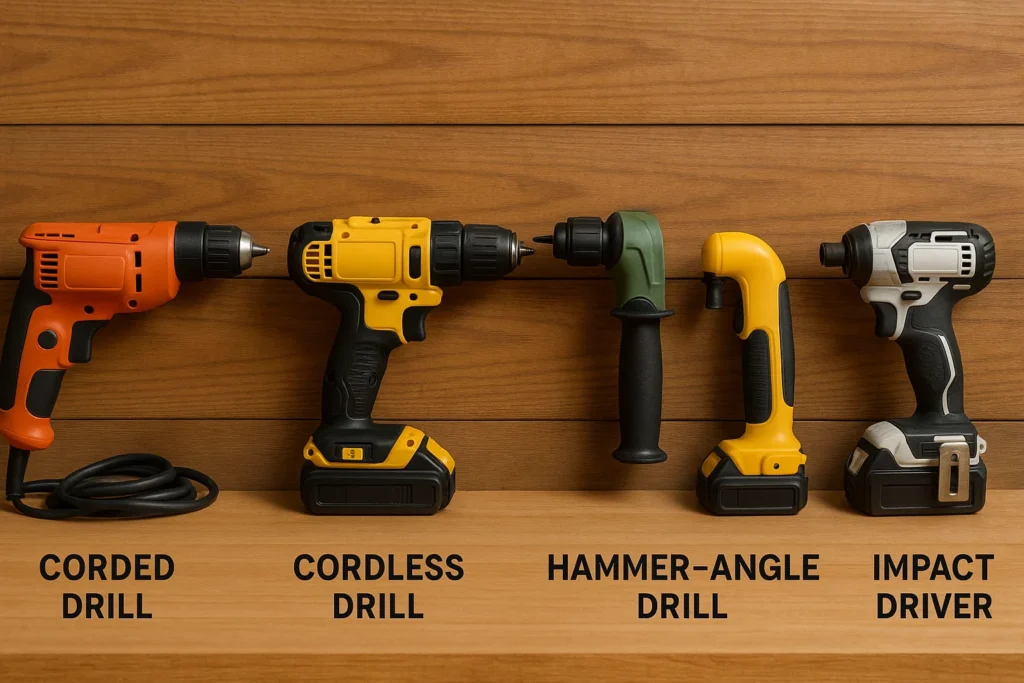
When I first started building furniture in my garage, I thought all drills were the same. I quickly learned how wrong I was. Different drills have different jobs, and picking the right one makes your work faster, safer, and a lot more fun.
Here’s a simple breakdown of the main types of drills:
| Type of Drill | Best For | Quick Tip |
| Corded Drill | Heavy-duty drilling where constant power is needed | Great for long jobs where a battery could die. |
| Cordless Drill | Everyday tasks, DIY projects, woodworking | Look for a model with lithium-ion batteries for longer life. |
| Hammer Drill | Drilling into hard surfaces like concrete and masonry | Perfect for installing shelves in brick walls. |
| Right-Angle Drill | Tight spaces like between wall studs | A lifesaver when working inside cabinets or corners. |
| Impact Driver | Driving screws and bolts, especially in wood or metal | Offers more torque than a standard drill. |
| Rotary Hammer | Serious demolition and concrete drilling | Bigger and stronger than a hammer drill, but heavier. |
Each of these tools has its own strengths. When I remodel kitchens or fix fences, I always double-check I have the right drill for the job—it saves tons of headaches later.
If you’re curious about drill types, you can read more on Bob Vila’s guide to drills, which is packed with solid advice.
Choosing the Right Drill for Your Project
Picking the right drill can feel overwhelming when there are so many options staring at you in the store. I’ve been there too—standing in the aisle, wondering if I needed the $300 beast or the $50 basic model. Over the years, I’ve learned a simple way to decide.
Here’s what I always ask myself:
- What material am I drilling into?
Wood, metal, drywall, or masonry? Each needs a different approach. - How often will I use it?
If you’re drilling once a month, a basic corded drill might be perfect. If you’re working every weekend, invest in a solid cordless model. - Do I need more torque or speed?
Higher torque is better for heavy tasks like driving big screws. Higher speed is great for light drilling jobs. - Do I care about weight and size?
When I’m working overhead or squeezing into tight spaces, a lightweight drill saves my arms—and my patience.
For most home users and DIYers, I usually recommend starting with a good cordless drill kit that includes multiple batteries and a charger. It’s flexible and covers 90% of the tasks you’ll run into.
If you want a deeper buying guide, check out Consumer Reports’ drill buying advice.
Understanding Drill Presses: What You Need to Know
The first time I used a drill press, it felt like unlocking a cheat code for precision. A drill press is basically a stationary tool that allows you to drill exact holes with perfect depth, angle, and alignment every time. It’s a game-changer if you do woodworking, metalworking, or any project where accuracy matters.
Here’s why I always keep a drill press in my shop:
- Accuracy:
With a drill press, I can make repeated holes at exactly the same depth and spacing. No shaky hands or guessing! - Power:
Drill presses are usually more powerful than handheld drills, which helps when boring through thick wood or metal. - Safety:
The stable base and built-in clamps reduce the risk of slipping, which keeps your hands safer. - Versatility:
You can use a drill press for sanding, mortising, and even polishing with the right attachments.
There are two main types of drill presses:
| Type | Description | Best For |
| Bench-Top | Smaller, sits on a workbench, easy to move around | Hobbyists, small workshops |
| Floor-Standing | Larger, freestanding unit with greater power and capacity | Professionals, heavy-duty use |
If you’re setting up a new workshop, a benchtop drill press is a great start. But if you’re like me and get serious about projects, you’ll soon be eyeing a heavy-duty floor model.
To learn more about choosing the right drill press, you can visit The Spruce’s detailed guide.
Safety Tips When Using Drills and Drill Presses
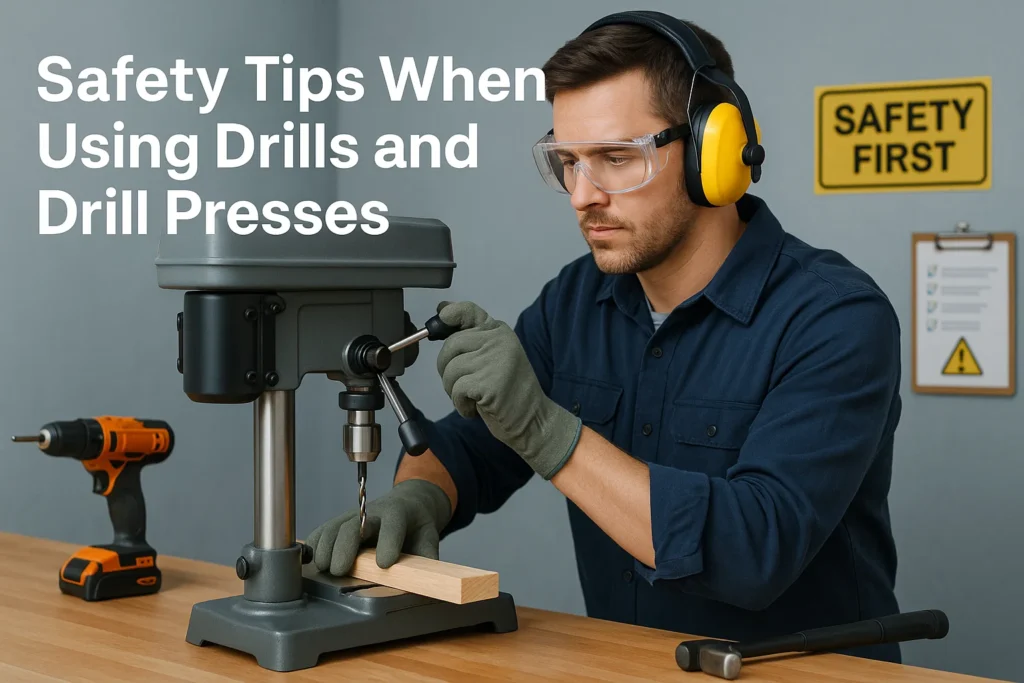
I’ve had my share of close calls with drills over the years. Trust me, safety isn’t something you want to learn the hard way. Following some simple rules has kept me safe on countless projects.
Here are my golden rules for drill safety:
- Wear safety goggles:
Always protect your eyes from flying debris. Even a tiny wood chip can cause major damage. I recommend OSHA-approved safety glasses for best protection. - Secure your material:
Clamp down wood, metal, or plastic before drilling. If the piece spins or shifts, it can cause serious injury. - Use the right bit for the material:
I’ve snapped cheap bits drilling into metal because I didn’t switch to a proper cobalt bit. - Keep hands and clothing clear:
Loose sleeves or gloves can get caught in the drill. I always roll up my sleeves and remove jewelry before starting. - Let the drill do the work:
Don’t force it. Pushing too hard can cause bits to break and drills to slip. - Unplug or remove the battery before changing bits:
It only takes one slip for a drill to start spinning unexpectedly—and believe me, it’s scary.
When using a drill press, always make sure the table and workpiece are stable. Also, lower the drill slowly and steadily to avoid sudden jams.
For a full list of official safety tips, I suggest reading this guide by the Canadian Centre for Occupational Health and Safety (CCOHS).
Maintenance and Care for Drills and Drill Presses
I believe that taking care of your tools is just as important as knowing how to use them. A well-maintained drill or drill press can last decades—I’ve got an old corded drill from college that still works like a champ!
Here’s how I keep my drills in top shape:
- Clean after every use:
I wipe off dust and debris with a dry cloth. For stubborn grime, I use a little compressed air. - Lubricate moving parts:
A few drops of machine oil on the chuck and other moving parts prevents rust and keeps things smooth. - Check the power source:
For cordless drills, I rotate batteries and avoid overcharging them. For corded drills, I regularly inspect cords for any frays or cuts. - Sharpen or replace bits:
A dull bit doesn’t just slow you down—it can also be dangerous. I use a bit sharpener or simply buy a fresh set when needed. - Store properly:
I keep my tools in a dry, temperature-controlled spot. Moisture is the enemy of both electric motors and drill bits.
With drill presses, I also make sure to:
- Align and tighten the belts properly.
- Grease the spindle if needed.
- Keep the table clean and rust-free.
For more detailed maintenance advice, check out Popular Woodworking’s guide to tool care.
Buying Guide: Tips for Beginners and Professionals
Over time, I’ve figured out that buying the right drill or drill press isn’t about picking the most expensive one. It’s about knowing what you actually need—and not getting distracted by fancy features you’ll never use.
Here’s what I always recommend:
For Beginners:
- Start simple:
A mid-range cordless drill with a good set of bits can tackle almost any DIY project. Something like the DeWalt 20V Max Drill is perfect. - Focus on reliability:
Look for good battery life, decent power (around 300-400 UWO—Unit Watts Out), and lightweight design. - Avoid gimmicks:
You don’t need laser guides or 27 speed settings right now.
For Professionals:
- Invest in quality:
When I upgraded to professional-grade tools, I noticed the difference immediately. Brands like Milwaukee, Makita, and Bosch are worth the price. - Get specialized gear:
Having both a hammer drill and an impact driver can save time and effort. - Prioritize power and durability:
Look for brushless motors and premium lithium-ion battery systems. Also, check warranties—a 3- or 5-year warranty shows confidence in the tool’s durability.
When buying a drill press, beginners should start with a benchtop model that has adjustable speed settings. Professionals should look for floor-standing models with features like laser guides, digital depth displays, and more horsepower.
If you want a smart checklist before shopping, I recommend looking at This Old House’s drill buying tips.
Top Recommended Brands and Tools
Over the years, I’ve tested a lot of tools—some were winners, others ended up in the “never again” pile. Today, I only trust a few brands when it comes to drills and drill presses.
Here’s my list of go-to brands based on years of hands-on experience:
| Brand | Why I Recommend It | Top Product Example |
| DeWalt | Reliable, durable, great for both pros and DIYers | DeWalt 20V MAX Cordless Drill |
| Milwaukee | Superior build quality, powerful brushless motors | Milwaukee M18 FUEL Hammer Drill |
| Makita | Lightweight, excellent battery life | Makita XFD131 18V LXT Drill Driver |
| Bosch | Precision engineering, excellent for drill presses | Bosch 11255VSR Bulldog Xtreme |
| JET Tools | Outstanding drill presses for woodworking and metal projects | JET JDP-15B Drill Press |
If you stick with any of these brands, you’re setting yourself up for years of great work without frustration. These tools have consistently earned top reviews from sites like Tool Review Lab and Pro Tool Reviews.
Common Mistakes to Avoid
Believe me, I’ve made plenty of mistakes with drills and drill presses. Learning from them has made me a better craftsman—and hopefully, sharing them will save you some time and trouble.
Here are the most common pitfalls I see (and sometimes lived through):
- Using the wrong drill bit:
It’s easy to grab the first bit you see, but drilling metal with a wood bit will quickly kill both your project and your patience. Always match the drill bit to the material. - Drilling too fast or slow:
Speed matters. Too fast on metal can overheat the bit; too slow on wood can splinter it. - Ignoring drill maintenance:
Skipping regular cleaning and lubrication shortens your drill’s life—and kills performance. - Not securing your material:
I’ve had boards spin wildly because I skipped clamping. It’s not just dangerous—it ruins your work. - Over-drilling:
Driving a screw or drill too deep can crack wood or strip out fasteners.
One trick I use is putting a piece of painter’s tape on my bit at the depth I want. When the tape hits the surface, I know it’s time to stop!
For more useful drilling tricks, check out This Old House’s drilling tips.
Conclusion and Final Thoughts
Looking back, I can honestly say that mastering drills and drill presses changed the way I approach every project. Whether it’s a simple home repair or a complex piece of furniture, having the right tool—and knowing how to use it—makes all the difference.
I hope this guide helped clear up the confusion around different types of drills, drill presses, safety tips, maintenance, and smart buying advice. Remember, it’s not about having the most expensive tool in your shed. It’s about having the right one—and taking good care of it.
If you’re just starting out, don’t stress. Grab a good cordless drill, learn the basics, and you’ll be amazed at what you can build. If you’re a pro, upgrading to specialized tools like hammer drills or drill presses can take your work to a whole new level.
Thanks for joining me on this journey through drills, presses, and everything in between. If you have any questions, drop a comment below or check out more helpful tool reviews and guides on trusted sources like Family Handyman and Popular Mechanics.
Now, go out there—and build something awesome!