When looking for new power tools, you might see brands like Kobalt and DeWalt. Many people wonder: is Kobalt as good as DeWalt? Both brands offer a wide range of tools for DIYers and professionals. However, they often target different users and have different price points.
DeWalt is generally seen as a professional-grade brand, known for its durability and performance on tough job sites. Kobalt, often found at Lowe’s, is typically positioned as a mid-range option, offering good value for homeowners and serious DIY enthusiasts. Understanding the differences in their build quality, performance, battery systems, and price can help you choose the right tools for your needs.
Kobalt Vs. Dewalt: A Brand Overview
Kobalt is a private label brand sold exclusively at Lowe’s. It was introduced in 1998 and has grown to include a vast array of hand tools, power tools, and automotive tools. Kobalt aims to provide a balance of quality and affordability, making it accessible to a broad consumer base.
DeWalt, on the other hand, is a subsidiary of Stanley Black & Decker. It has a long-standing reputation for producing robust and reliable tools that are built to withstand demanding professional use. DeWalt tools are often found in dedicated tool stores and major hardware retailers, appealing to tradespeople and serious hobbyists who need tools that can perform under pressure.
Performance And Durability
When comparing performance and durability, DeWalt often takes the lead, especially in its professional lines. DeWalt tools are engineered with high-quality components, powerful motors, and rugged casings designed to handle daily, heavy-duty use. Many professional reviews and user testimonials highlight DeWalt’s ability to withstand drops, dust, and the general wear and tear of construction sites.
Kobalt tools offer solid performance for their price point. They are generally well-built and suitable for homeowner tasks and moderate DIY projects. While Kobalt has improved its offerings over the years, particularly with its XTR line, they may not always match the extreme durability and long-term performance of DeWalt’s professional series when subjected to the most rigorous conditions. For instance, a DeWalt hammer drill might offer higher torque and better cooling for extended drilling into concrete compared to a Kobalt equivalent.
Battery Systems And Innovation
Both brands offer cordless tool systems that rely on rechargeable batteries. DeWalt’s 18V/20V MAX system is one of the most popular and extensive in the industry, featuring a wide range of tools powered by lithium-ion batteries. They also have their FLEXVOLT system, which offers higher voltage for more demanding applications. DeWalt is known for its continuous innovation, often introducing new battery technologies and tool features.
Kobalt also has its own battery platforms, including 24V Max and a newer 24V Max Xtreme (XTR) line. The 24V Max system offers good power for most home projects, and the XTR line aims to provide enhanced performance and durability. However, the range of tools available within Kobalt’s battery ecosystems may be smaller compared to DeWalt’s, and DeWalt’s battery technology is often considered more advanced, especially at the higher voltage levels.
Price And Value
Price is a significant differentiator. Kobalt tools are generally more affordable than comparable DeWalt tools. This makes Kobalt an attractive option for homeowners, DIYers on a budget, or those who don’t use their tools every day. You can often find Kobalt tool kits or individual tools at lower price points, offering good value for occasional or moderate use.
DeWalt tools typically come with a higher price tag, reflecting their professional-grade construction and performance. For professionals or very serious hobbyists who rely on their tools daily, the higher initial cost can be justified by their longevity and reliability, potentially leading to lower total cost of ownership over time. When considering value, it’s essential to match the tool’s capabilities and durability to your specific needs and usage frequency.
Tool Range And Specialization
DeWalt offers an extremely wide range of tools, from basic hand tools to specialized construction equipment. They have dedicated lines for different trades, such as woodworking, concrete work, and automotive repair. This broad selection means professionals can often find exactly the tool they need for any specific job within the DeWalt ecosystem.
Kobalt also provides a good variety of tools, but its range is generally more focused on the needs of homeowners and general contractors. While they cover most common DIY tasks, you might find fewer highly specialized tools compared to DeWalt. However, Kobalt’s exclusive availability at Lowe’s can be a convenience for shoppers at that retailer.
Warranty And Support
Both brands offer warranties, but DeWalt’s warranty is often considered more comprehensive, especially for its professional lines. DeWalt typically offers a 3-year limited warranty on many of its tools, along with a 1-year service agreement and 90-day money-back guarantee. This reflects their confidence in the durability of their professional-grade products.
Kobalt generally offers a 3-year limited warranty on its power tools as well. While this is competitive, some users feel that DeWalt’s warranty support and service network are more robust, particularly for professionals who need quick repairs or replacements to minimize downtime.
User Experience And Ergonomics
Ergonomics and user comfort are important for any tool user. Both Kobalt and DeWalt pay attention to this, but DeWalt often receives praise for the comfortable grips and balanced design of its tools, which can reduce fatigue during long work sessions. Their tools are designed with the professional user in mind, who might be holding the tool for hours at a time.
Kobalt tools are generally comfortable to hold and use for typical DIY tasks. However, some users might find that DeWalt offers a slightly more refined ergonomic experience, especially in their higher-end models. This can be subjective, and trying out tools in person is always recommended.
Specific Tool Comparisons
Let’s look at a few common tool types:
Cordless Drills/drivers
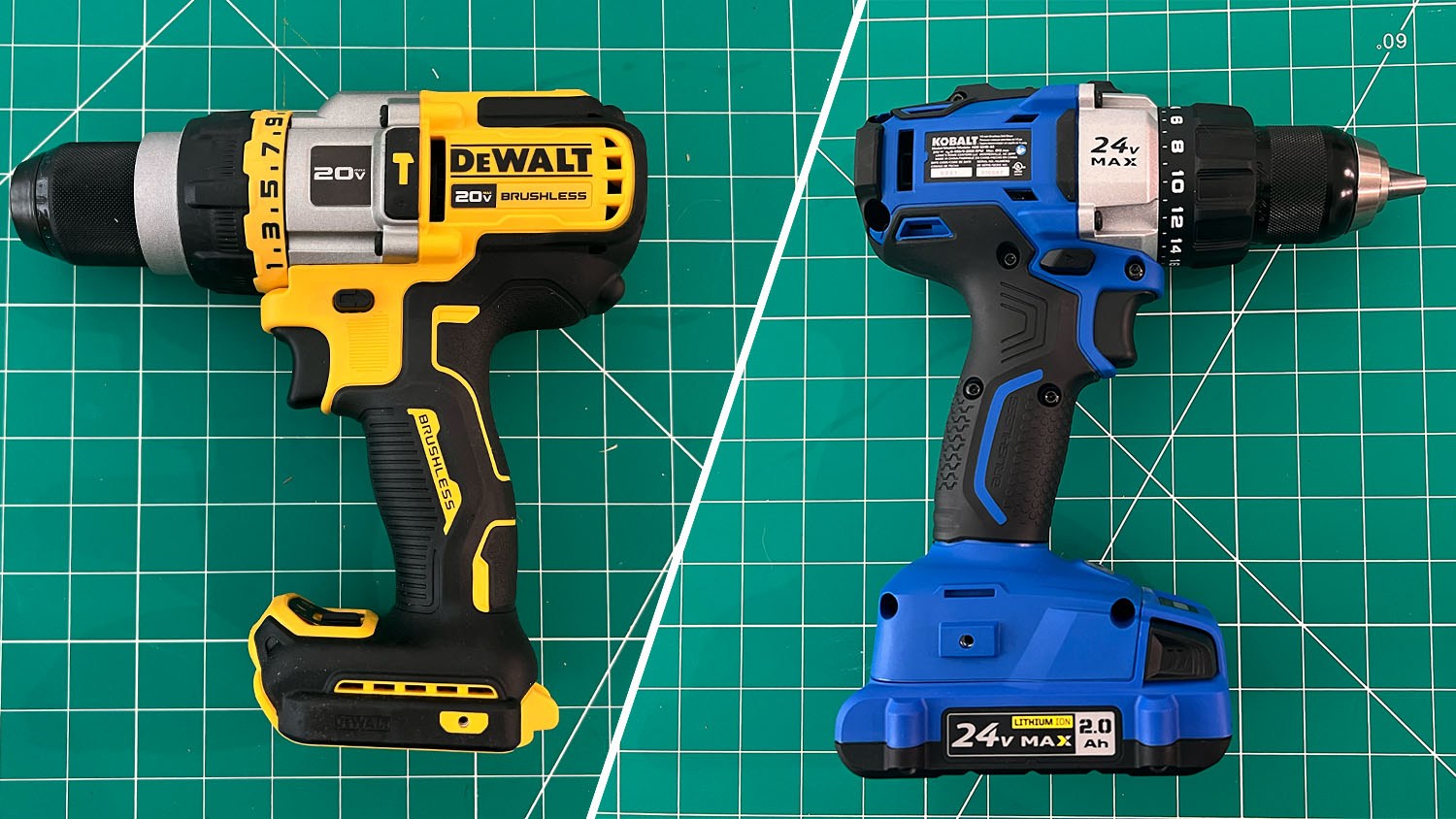
- DeWalt: Known for powerful motors, excellent battery life, and durable construction. Models like the DCD791 (20V MAX XR Brushless Compact Drill/Driver) are popular for their performance and compact size.
- Kobalt: Offers good drilling power for home use with its 24V Max system. Models like the 24V Max Brushless Drill/Driver provide solid performance for most DIY tasks.
Impact Drivers
- DeWalt: Features high torque and speed, making them ideal for driving large fasteners quickly. The DCF887 (20V MAX XR Brushless Impact Driver) is a common choice for professionals.
- Kobalt: The 24V Max impact drivers deliver sufficient torque for common tasks like deck building or assembling furniture. They offer a good balance of power and price for homeowners.
Saws
- DeWalt: Offers a wide array of saws, including circular saws, miter saws, and reciprocating saws, known for their cutting power and accuracy. Their track saws and table saws are particularly favored in woodworking.
- Kobalt: Provides capable circular saws, jigsaws, and miter saws for general-purpose cutting. They are suitable for DIY projects but may not offer the same precision or power as DeWalt’s professional-grade saws for very demanding tasks.
Credit: bestreviews.com
Is Kobalt As Good As Dewalt? The Verdict
So, is Kobalt as good as DeWalt? The answer depends on your specific needs and budget.
DeWalt is generally considered the superior brand when it comes to professional-grade performance, extreme durability, and a vast tool ecosystem. If you are a professional tradesperson, a contractor, or a serious hobbyist who needs tools that can withstand heavy, daily use and deliver top-tier performance, DeWalt is likely the better investment.
Kobalt is an excellent choice for homeowners, DIYers, and those who need reliable tools for occasional or moderate use. Kobalt offers a compelling balance of good quality, useful features, and affordability. For many common household tasks, from assembling furniture to hanging shelves or tackling small home improvement projects