Have you ever wondered if you can use a 3/8 bit in a 1/2 drill? This question comes up often, especially when people need flexibility in their tools. Understanding the compatibility of drill bits and drills is important. Using the wrong combination can damage your equipment, waste your time, or even cause injury. But sometimes, mixing sizes can work—and even help you get more done. Let’s dive deep into this topic so you can work smarter, safer, and more confidently with your tools.
What Do Drill Sizes Mean?
Drill sizes are about two things: the size of the drill’s chuck and the size of the drill bit you want to use. The chuck is the part of the drill that holds the bit. For example, a 1/2-inch drill has a chuck that can open up to 1/2 inch, meaning it can hold bits up to that size. A 3/8-inch bit is a bit with a shank (the part you put into the drill) that is 3/8 inch across.
Most drills are labeled by their chuck size:
- 3/8-inch drills: Hold bits up to 3/8 inch.
- 1/2-inch drills: Hold bits up to 1/2 inch.
- Some specialty drills have smaller or larger chucks, but 3/8 and 1/2 are standard.
Drill bits come in many sizes and shapes. The key is matching the shank size to the chuck size. Sometimes, you can use a smaller bit in a larger drill, but there are things to watch out for.
Can You Use A 3/8 Bit In A 1/2 Drill?
The short answer is yes—you can usually use a 3/8 bit in a 1/2 drill. The larger chuck can grip smaller bits without much trouble. But the real answer is more complicated. There are 8 key factors you need to check before you decide. Each factor can affect how safe, efficient, and effective your drilling will be.
Let’s explore each one so you can make the right choice.
1. Chuck Compatibility
The chuck is designed to hold a range of bit sizes. A 1/2-inch chuck can close tight enough to hold a 3/8-inch bit. Most modern drills have adjustable chucks that grip bits from very small up to their maximum size.
Example: If your drill’s chuck opens from 1/16 inch to 1/2 inch, a 3/8-inch bit fits comfortably.
However, not all chucks are made equal. Some cheaper drills have loose jaws or uneven closing, which can make it harder to grip smaller bits tightly.
Practical tip: Always check the minimum chuck size. If your chuck only closes down to 1/4 inch, you can use any bit larger than that. For bits smaller than the minimum, you’ll need a bit adapter.
Non-obvious insight: Some drills have keyless chucks, which rely on hand-tightening. This can sometimes result in less grip on small bits, especially if the chuck is worn.
2. Bit Shank Shape
The shape of the shank matters just as much as the size. Most drill bits have either a round shank or a hex shank.
- Round shank: Most common. Fits easily in any adjustable chuck.
- Hex shank: Has six flat sides. Designed for better grip and less slipping.
A 1/2 drill can usually hold both types, but some chucks are optimized for hex shanks. If your bit is 3/8-inch but has a hex shank, you may get a tighter fit and less chance of the bit spinning in the chuck.
Data point: Many cordless drills now feature chucks designed for hex shank bits, because they’re less likely to slip.
Practical tip: If your drill struggles to grip a round shank bit, try a hex shank version.
3. Power And Torque
Drills with 1/2-inch chucks are usually more powerful. They’re made for bigger jobs and tougher materials.
Statistics: A typical 1/2-inch drill delivers between 400 and 1200 watts of power, while 3/8-inch drills usually max out around 300 to 600 watts.
When you put a 3/8 bit in a 1/2 drill, you get more power than you need. This can be a good thing if you’re drilling through hardwood, metal, or masonry. But it can also be risky:
- Too much torque can cause the bit to snap, especially if you push too hard.
- Smaller bits may bend or break under heavy force.
Example: If you use a 1/2 drill to drive a small pilot hole, be gentle on the trigger. Let the drill do the work, and don’t force it.
Non-obvious insight: Many professionals use larger drills with smaller bits to speed up work, but they adjust the speed and pressure carefully.
4. Speed Control
Speed is important. 1/2-inch drills often have variable speed control. This is crucial when using smaller bits, because you don’t want to spin them too fast.
Data: The ideal speed for drilling wood with a 3/8 bit is about 1000–1500 RPM. A 1/2 drill can easily reach speeds of 2000 RPM or more.
Practical tip: Start slow, then increase speed as needed. High speed can overheat the bit, dulling the edge or causing breakage.
Example: When drilling metal, use lower speeds to keep the bit cool and prevent dulling.
Comparison table: Here’s how common drill sizes compare for speed control and power.
| Drill Chuck Size | Typical Power (Watts) | Speed Range (RPM) | Best Use |
|---|---|---|---|
| 3/8 inch | 300–600 | 800–1800 | Light tasks |
| 1/2 inch | 400–1200 | 600–2000 | Heavy-duty |

Credit: drillsandcutters.com
5. Material Compatibility
The type of material you’re drilling affects the bit and drill you need. A 3/8 bit is common for wood, metal, and plastic. A 1/2 drill is strong enough for concrete and masonry.
Practical tip: If you’re drilling into soft materials, a 1/2 drill can be overkill. It’s easy to damage the workpiece if you’re not careful.
Example: Drilling a pilot hole in drywall with a powerful drill may punch through too fast. Adjust your speed and pressure.
Non-obvious insight: For delicate materials, use a light touch and consider using a drill with a clutch. This prevents overdriving the bit.
6. Bit Security And Slippage
When you use a small bit in a large chuck, there’s a risk of slippage. The bit may spin inside the chuck if it’s not tightened properly.
- Always check that the jaws are gripping the bit evenly.
- Tighten the chuck fully. If it’s a keyed chuck, use the key for extra torque.
- For keyless chucks, hand-tighten as much as possible.
Example: If you notice the bit slipping, stop immediately. Re-tighten or switch to a different bit.
Data: Studies show that hex shank bits reduce slippage by up to 80% compared to round shank bits.
Comparison table: Bit security for different shank types.
| Shank Type | Slippage Risk | Best for |
|---|---|---|
| Round | High | General drilling |
| Hex | Low | High-torque tasks |
Credit: www.springcanyon.org
7. Bit Length And Stability
Bit length matters, especially with powerful drills. A longer bit is more likely to bend or wobble when spinning fast.
- Shorter bits are more stable in a 1/2 drill.
- Longer bits may vibrate, especially if the drill is heavy.
Example: If you need a deep hole, use a bit with a thicker shank for stability.
Practical tip: If you notice wobbling, check if the bit is seated straight in the chuck. Sometimes, re-inserting the bit solves the problem.
Non-obvious insight: Professionals sometimes use brad point bits for extra stability in wood. These bits start clean and are less likely to wander.
8. Safety Considerations
Safety should always come first. Using a small bit in a powerful drill can be risky if you’re not careful.
- Wear safety glasses to protect your eyes.
- Hold the drill firmly with both hands.
- Don’t force the bit. Let the drill do the work.
- If the bit binds or catches, stop and reset.
Example: If you’re drilling overhead, be extra careful. Bits can break and fall.
Data: The US Consumer Product Safety Commission reports thousands of drill-related injuries each year—most are preventable with proper safety steps.
Practical tip: Always check the bit for cracks or wear before using it.
Real-world Examples
Let’s look at some situations where using a 3/8 bit in a 1/2 drill is common.
Construction: Workers often use powerful 1/2 drills with smaller bits for framing, electrical work, or plumbing. The extra torque helps, but they use speed control to avoid breaking bits.
DIY Projects: Homeowners may have only one drill. If it’s a 1/2-inch model, they use all sizes of bits for different jobs. The key is adjusting speed and pressure.
Metalworking: Professionals use 1/2 drills for pilot holes with small bits, then switch to larger bits for final sizing.
Woodworking: Cabinet makers use 1/2 drills for installing hardware, often with bits as small as 1/8 inch.
Comparing Drill And Bit Combinations
To help you choose, here’s a table comparing common drill and bit combinations.
| Drill Size | Bit Size Used | Common Application | Risk Level |
|---|---|---|---|
| 1/2 inch | 3/8 inch | General drilling, pilot holes | Low if used correctly |
| 1/2 inch | 1/2 inch | Heavy-duty drilling | Medium |
| 3/8 inch | 3/8 inch | Light tasks | Low |
| 3/8 inch | 1/2 inch | Not possible | High (impossible fit) |
Common Mistakes And How To Avoid Them
Many beginners make mistakes when using mismatched drills and bits. Here’s how to avoid trouble:
- Not checking chuck size: Always check your drill’s minimum and maximum chuck size.
- Using worn chucks: If your chuck is worn, it may not grip smaller bits securely.
- Ignoring speed settings: High speed can damage small bits. Adjust your settings.
- Forcing the bit: Let the drill do the work—don’t force the bit into the material.
- Not using adapters: For very small bits, use a bit adapter.
- Skipping safety gear: Always wear eye protection and check your surroundings.
- Overlooking bit type: Match the bit shank to the chuck for best results.
- Failing to check stability: Make sure the bit is straight and seated properly.
When Should You Not Use A 3/8 Bit In A 1/2 Drill?
There are times when using a 3/8 bit in a 1/2 drill is not ideal:
- When the bit is very delicate and the drill is too powerful.
- If the bit is smaller than the chuck’s minimum size.
- When working in tight spaces—the larger drill may not fit.
- If the material is soft and the drill is heavy, risking damage.
Practical tip: For precision work, use the smallest drill that fits the job.
Choosing The Right Drill For Your Bit
If you’re buying a drill, think about what bits you use most often. Here’s what matters:
- Chuck size: Choose a drill that fits your most common bits.
- Power: Don’t buy more power than you need.
- Speed control: Look for variable speed settings.
- Weight and balance: Heavy drills are tiring for long jobs.
Common buyer mistake: Many people buy a powerful drill but only use small bits. This can lead to wasted money and more risk.
Useful Accessories
There are accessories that make using small bits in large drills easier.
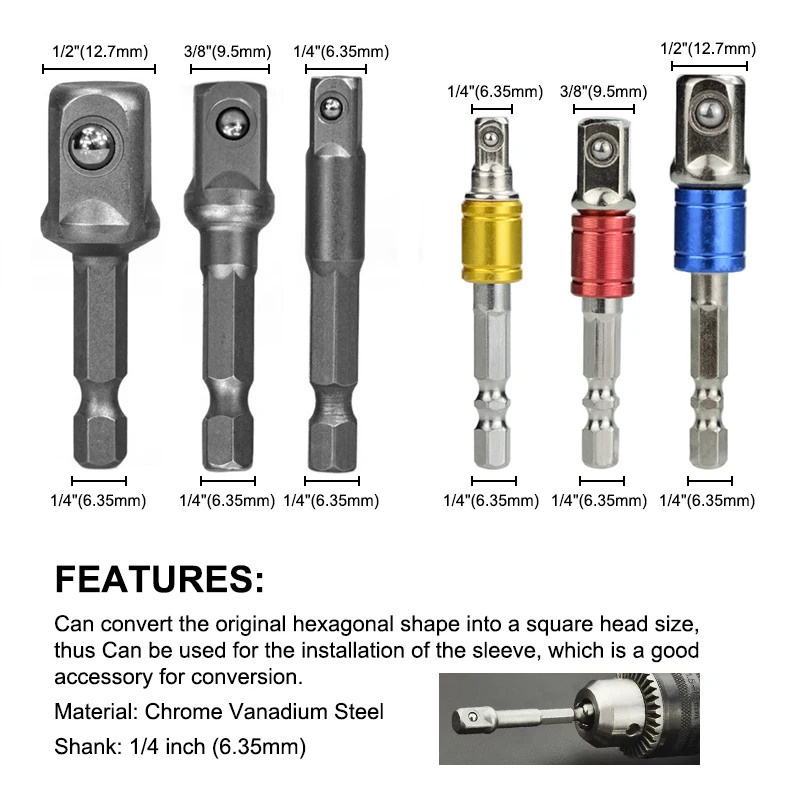
- Bit adapters: These fit small bits into larger chucks.
- Extension bars: Helpful for deep holes.
- Clutch settings: Protect small bits from too much torque.
Example: If you use 1/16-inch bits often, a bit adapter can help you fit them securely in a 1/2-inch chuck.

Credit: www.ebay.com
Maintenance And Longevity
Taking care of your drill and bits is key. Here’s how:
- Clean the chuck regularly.
- Check bits for wear, cracks, or dullness.
- Store bits properly—avoid dropping them.
- Oil moving parts of the drill as recommended.
Data: Well-maintained drills last 5–10 years longer than neglected ones.
Expert Insights
Many professionals mix and match bits and drills for flexibility. Here are their top tips:
- Use speed control to protect small bits.
- Check chuck tightness before every use.
- Choose hex shank bits for high-torque jobs.
- Use adapters for very small bits.
Non-obvious insight: Some pros use special lubricants when drilling metal to keep bits cool and sharp.
Environmental Factors
Temperature and humidity can affect drilling.
- Cold metal can crack bits more easily.
- Wet wood is harder to drill cleanly.
Practical tip: Store your tools in a dry place.
Comparing Popular Drill Brands
Some brands make chucks that are better at holding small bits. Here’s a quick comparison.
| Brand | Chuck Quality | Minimum Size | Keyless/Keyed |
|---|---|---|---|
| DeWalt | High | 1/16 inch | Keyless |
| Makita | Medium | 1/16 inch | Keyless |
| Milwaukee | High | 1/8 inch | Keyless |
| Ryobi | Medium | 1/8 inch | Keyless |
Practical tip: If you often use small bits, look for drills with chucks that close tightly to 1/16 inch.
Environmental Responsibility
Disposing of old bits and drills should be done responsibly.
- Recycle metal bits when worn out.
- Donate working drills to community groups.
- Don’t throw power tools in the trash.
External link: For more recycling tips, see EPA Recycling Guide.
Frequently Asked Questions
Can I Use A 3/8 Bit In A 1/2 Drill For Masonry?
Yes, you can. But make sure the bit is rated for masonry work. Use slower speeds and keep the bit cool to avoid damage.
Will A 3/8 Bit Slip In A 1/2 Drill?
If the chuck is in good condition and tightened properly, slippage is rare. Hex shank bits are less likely to slip than round shank bits.
Is It Safe To Use Small Bits In Large Drills?
It is safe if you use proper technique. Adjust speed, avoid forcing the bit, and always use safety gear.
What Is The Smallest Bit I Can Use In A 1/2 Drill?
Most 1/2 drills can hold bits down to 1/16 inch. Check your drill’s specs to be sure.
Do I Need A Bit Adapter For A 3/8 Bit In A 1/2 Drill?
No, a 3/8 bit fits directly in a 1/2 drill. Adapters are only needed for bits smaller than the chuck’s minimum size.
Final Thoughts
Using a 3/8 bit in a 1/2 drill is not only possible—it’s often practical. The larger chuck gives you flexibility, and the extra power can help with tough jobs. But you must pay attention to chuck compatibility, bit shank shape, power and speed, material, security, stability, and safety. Avoid common mistakes, use the right accessories, and take care of your tools. Whether you’re a professional or a DIY enthusiast, knowing how to match bits and drills will help you get the best results and keep your work safe and efficient.