The Milwaukee 1-inch impact wrench is a powerful tool designed for heavy-duty applications. But is it worth the investment for your specific needs? This article will break down what makes this tool stand out, who it’s best suited for, and whether the price tag aligns with the performance you can expect.
We’ll explore its features, compare it to alternatives, and help you decide if this Milwaukee beast belongs in your toolbox.
Milwaukee 1-inch Impact Wrench: Powerhouse For Professionals
Milwaukee is known for its professional-grade power tools, and their 1-inch impact wrench is no exception. This tool is built for the toughest jobs, often found in heavy equipment repair, industrial maintenance, and large-scale construction. Its primary purpose is to deliver immense torque for loosening and tightening large bolts and nuts that smaller impact wrenches simply cannot handle.
The sheer power of a 1-inch impact wrench is its defining characteristic. These tools are designed to provide significantly more torque than their 1/2-inch or 3/4-inch counterparts. For professionals who regularly encounter rusted, overtightened, or exceptionally large fasteners, this level of power is not a luxury; it’s a necessity. Without it, tasks that should take minutes can stretch into hours, costing valuable time and labor.
Milwaukee’s approach to tool design emphasizes durability and performance. Their 1-inch impact wrench models are typically constructed with robust materials, often featuring a metal gear housing to withstand the harsh environments where they are used. They are engineered to deliver consistent, high torque output, even under demanding conditions. This reliability is crucial for professionals who depend on their tools to perform day in and day out without failure.
Key Features That Set Milwaukee Apart
Milwaukee often packs its tools with innovative features aimed at improving user experience and efficiency. When considering their 1-inch impact wrench, several key aspects stand out:
- High Torque Output: This is the headline feature. Milwaukee’s 1-inch models are designed to deliver over 2,000 ft-lbs of breaking torque and often exceed 1,000 ft-lbs of fastening torque. This raw power is essential for breaking free stubborn fasteners on heavy machinery, large trucks, and industrial equipment. For instance, removing lug nuts on a semi-truck or bolts on agricultural equipment requires this level of force.
- Brushless Motor Technology: Many of Milwaukee’s newer models incorporate POWERSTATE™ brushless motors. These motors are more efficient than traditional brushed motors, leading to longer tool life, more power, and extended runtimes on a single battery charge. They also run cooler, which is important during prolonged, heavy-duty use.
- REDLITHIUM™ Battery System: The impact wrench is part of Milwaukee’s extensive M28™ or M18 FUEL™ battery ecosystem. This means you can use the same batteries across a wide range of Milwaukee tools, which can be a significant cost-saving and convenience factor if you already own other tools from the brand. The higher capacity REDLITHIUM™ batteries provide the sustained power needed for a 1-inch impact wrench.
- Multiple Speed/Torque Settings: To provide better control and versatility, these wrenches usually come with multiple modes or settings. This allows users to select the appropriate power level for different tasks, reducing the risk of over-tightening or damaging fasteners. Some models feature an auto-shutoff mode to prevent over-rotation once a bolt is snug.
- Durable Construction: As mentioned, Milwaukee tools are built tough. Expect a reinforced body, often with rubber overmolding to protect against impacts and drops. The anvil where the socket attaches is typically forged and heat-treated for maximum strength and resistance to wear.
Who Needs A 1-inch Impact Wrench?
The decision to invest in a 1-inch impact wrench hinges on your specific professional needs. This is not a tool for the average DIYer or homeowner, unless they are deeply involved in projects requiring extreme torque.
- Heavy Equipment Mechanics: Technicians working on construction machinery, agricultural equipment (tractors, combines), and large industrial vehicles will find this tool indispensable. The bolts and nuts on these machines are often massive and subjected to extreme stress, making them difficult to remove with anything less.
- Fleet Maintenance: For businesses maintaining fleets of large trucks, buses, or other heavy vehicles, a 1-inch impact wrench is essential for tasks like tire changes, suspension work, and engine component removal. The time saved on these repetitive tasks can significantly impact operational efficiency.
- Industrial Settings: Factories, manufacturing plants, and maintenance departments in large industrial facilities often deal with heavy machinery and structural components. A 1-inch impact wrench can be crucial for assembly, disassembly, and repair work in these environments.
- Large-Scale Construction: While not used on every bolt, some phases of large construction projects, especially those involving heavy steel structures or large machinery installation, might require the torque provided by a 1-inch impact wrench.
Is The Milwaukee 1-inch Impact Worth The Cost?
The value proposition of any tool, especially a high-end one like a Milwaukee 1-inch impact wrench, is a balance between its cost and the benefits it provides. These tools are not cheap, often retailing for several hundred dollars, sometimes even close to a thousand depending on the kit and battery options.
Cost Considerations
When evaluating the worth, consider these financial aspects:
- Initial Purchase Price: This is the most obvious factor. A new Milwaukee 1-inch impact wrench, especially a FUEL™ model with batteries and a charger, represents a significant investment. You’re paying for cutting-edge technology, robust build quality, and the Milwaukee brand reputation.
- Total Cost of Ownership: Beyond the initial purchase, think about the long-term. A high-quality tool like this is designed for longevity. If it performs reliably for many years and reduces labor time, its cost per use can become very low. Conversely, a cheaper, less durable tool might need frequent repairs or premature replacement, ultimately costing more.
- Battery Ecosystem: If you are already invested in the Milwaukee M18™ or M28™ battery platform, the cost might be lower as you can leverage existing batteries and chargers. If not, you’ll need to factor in the cost of batteries and a charger, which can add substantially to the overall price.
- Comparison to Alternatives: How does the Milwaukee stack up against other brands? While Milwaukee often sits at the premium end, it’s important to compare its price and features against competitors like DeWalt, Makita, Snap-on, or Ingersoll Rand. Sometimes, a slightly lower price point from a competitor might offer comparable performance for your needs.
Performance And Productivity Gains
The primary justification for the cost of a 1-inch impact wrench lies in its ability to boost productivity and efficiency.
- Time Savings: For tasks involving large, stubborn fasteners, a 1-inch impact wrench can reduce the time spent by a factor of 5 or even more compared to manual methods or less powerful tools. This translates directly into saved labor costs and the ability to complete more jobs in the same amount of time.
- Reduced Physical Strain: Using manual tools or even smaller impact wrenches for extremely difficult fasteners can be physically demanding and even dangerous, leading to fatigue and potential injury. A powerful 1-inch impact wrench takes the strain out of these tasks, allowing mechanics and technicians to work more comfortably and safely.
- Job Completion: In some cases, a task might be practically impossible without the torque of a 1-inch impact wrench. Not having the right tool can mean a job simply cannot be completed, or requires extensive, time-consuming workarounds. Having this tool ensures you can tackle even the most challenging jobs.
- Professional Reputation: For service businesses, having the right tools not only speeds up work but also contributes to a professional image. Clients see that you are equipped to handle any job efficiently and effectively.
When It Might Not Be Worth It
Despite its power, a 1-inch impact wrench is overkill for many applications.
- Automotive Repair (Standard Cars): For most passenger car and light truck repairs, a 1/2-inch impact wrench is more than sufficient. Using a 1-inch impact wrench on smaller fasteners can easily lead to over-tightening, stripping threads, or damaging components.
- Home Use: Unless you are working on large equipment like tractors or heavy trailers, a 1-inch impact wrench is likely unnecessary for typical home projects.
- Limited Budget: If your budget is extremely tight and you only occasionally encounter slightly stubborn bolts, a high-quality 1/2-inch or 3/4-inch impact wrench might be a more practical investment, possibly supplemented by a breaker bar for extreme cases.
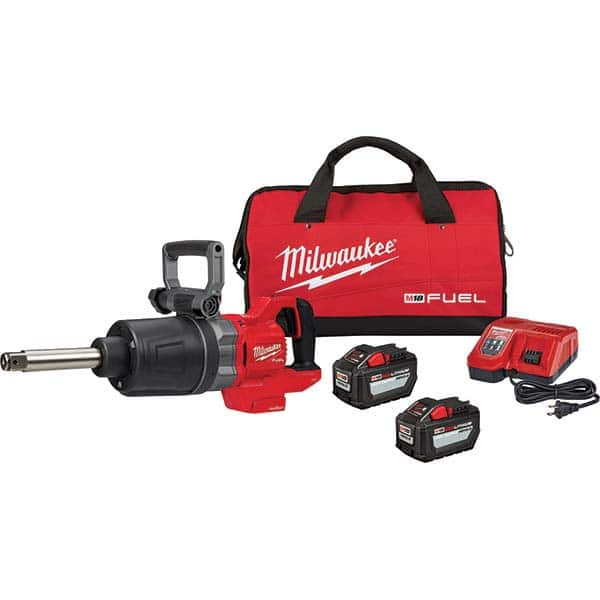
Credit: www.mscdirect.com
Milwaukee 1-inch Impact Wrench Models And Specifications
Milwaukee offers different versions of their 1-inch impact wrench, primarily differing in their power source (corded vs. cordless) and specific technology (e. g. , FUEL™). The most common and sought-after are their cordless FUEL™ models, which leverage their advanced battery technology.
Cordless Fuel™ 1-inch Impact Wrenches
These are the flagships, offering the best combination of power, portability, and technology.
- High Torque Output: Expect breaking torques well over 2,000 ft-lbs and fastening torques in the 1,000-1,500 ft-lbs range. For example, the Milwaukee 2867-22HD (a popular model) boasts 2,000 ft-lbs of torque for loosening and 1,400 ft-lbs of torque for tightening.
- POWERSTATE™ Brushless Motor: This ensures maximum efficiency, power, and durability.
- REDLINK PLUS™ Intelligence: This advanced electronic system provides overload protection for both the tool and the battery, optimizing performance and preventing damage. It also offers advanced communication between the battery, tool, and charger.
- Variable Speed Trigger: Allows for precise control over speed and power.
- 4-Mode Control: Many models include a 4-mode system:
- Mode 1: For precision work or delicate applications.
- Mode 2: For general fastening.
- Mode 3: Maximum torque for tough jobs.
- Mode 4 (Auto-Shutoff): This mode is designed to prevent over-rotation once a fastener is sufficiently tightened, which is crucial for preventing damage to threads and components.
- LED Light: Integrated work light illuminates the work area.
- Ergonomics: Designed for comfort during extended use, with rubber grips and balanced weight distribution.
Example Specifications (Milwaukee 2867-22HD):
| Feature | Specification |
|---|---|
| Voltage | 18V |
| Max. Breaking Torque | 2,000 ft-lbs |
| Max. Fastening Torque | 1,400 ft-lbs |
| No-Load Speed | 0-1,750 RPM |
| Impacts Per Minute | 0-2,400 IPM |
| Tool Length | 9.29 inches |
| Weight (with battery) | Approx. 7.7 lbs (with HIGH OUTPUT™ HD 5.0 Ah battery) |
Comparison With Other Impact Wrench Sizes
To truly understand the Milwaukee 1-inch impact wrench’s place, it’s helpful to compare it to its smaller siblings.
| Feature | 1/2-Inch Impact Wrench (Typical Pro) | 3/4-Inch Impact Wrench (Heavy Duty) | 1-Inch Impact Wrench (Extreme Duty) |
|---|---|---|---|
| **Max Torque** | 500-1,000 ft-lbs | 800-1,500 ft-lbs | 1,000-2,000+ ft-lbs |
| **Primary Use** | Automotive, general repair | Heavy automotive, light industrial | Heavy equipment, industrial |
| **Fastener Size** | Up to 1-inch | Up to 1.5-inch | 1-inch and larger |
| **Size & Weight** | Compact, lighter | Larger, heavier | Bulkiest, heaviest |
| **Cost** | $150 – $400 | $300 – $600 | $400 – $1000+ |
| **Milwaukee Example** | 2767-20 (Mid-Torque) | N/A (less common in cordless) | 2867-22HD (High Torque) |
Key Takeaway: The 1-inch impact wrench is in a league of its own for sheer power. Choosing the right size is critical to avoid damaging fasteners or underperforming on a job.
Alternatives To The Milwaukee 1-inch Impact Wrench
While Milwaukee is a top contender, it’s wise to consider other options before making a purchase. The market for high-torque impact wrenches includes other reputable brands and even pneumatic (air-powered) tools.
Other Cordless Brands
Several other major power tool manufacturers offer 1-inch cordless impact wrenches that compete directly with Milwaukee.
- DeWalt: Known for their robust construction and powerful XR and FLEXVOLT lines. DeWalt’s 1-inch impact wrenches often feature high torque ratings and durable designs, making them a strong alternative. They also have a vast battery ecosystem.
- Makita: Makita offers powerful tools with their XPT (Extreme Protection Technology) for dust and water resistance. Their cordless impact wrenches are often praised for their balance and ergonomic design, alongside strong performance.
- Ingersoll Rand (IR): While traditionally known for pneumatic tools, IR also offers high-performance cordless options that rival Milwaukee and DeWalt in terms of raw power and durability, often targeting heavy-duty industrial users.
When comparing, look at the breaking torque, fastening torque, battery platform compatibility, durability features, and price. Often, the choice between these top brands comes down to personal preference for ergonomics, existing tool ownership, or specific feature sets.
Pneumatic (air-powered) Impact Wrenches
For many years, pneumatic impact wrenches were the undisputed kings of torque. They still hold a significant place, especially in professional garages and industrial settings.
Pros of Pneumatic:
- Raw Power: High-end pneumatic wrenches can often deliver even higher torque than their cordless counterparts, especially those designed for industrial use.
*