Many people who work with metal or wood often ask a simple question: Can a drill press be used as a mill? This question comes from the idea that both tools look similar. They both hold a spinning bit, and both can cut material. But are they the same? Can you use a drill press to do milling work?
In this article, we will explain the differences between these tools. We will also talk about what a drill press can and cannot do. By the end, you will understand if you can use a drill press as a mill.
What Is a Drill Press?
A drill press is a machine used mainly to make holes. It holds a drill bit that spins fast. You move the bit down to cut into the material. The drill press is very good at making straight, clean holes.
Key features of a drill press:
- Spins drill bits up and down
- Usually used for drilling holes
- Has a simple table to hold the workpiece
- Moves only in vertical direction
Drill presses are common in workshops and schools. They help make accurate holes in wood, metal, or plastic.
What Is a Milling Machine?
A milling machine is a tool used to cut and shape materials. It can move the cutting tool in many directions. This helps create flat surfaces, slots, or even complex shapes.
Key features of a milling machine:
- Can move cutting tool in different directions (X, Y, Z axes)
- Uses special cutting bits called end mills
- Can cut, shape, and finish materials
- Has a strong table that can move left-right and front-back
Milling machines are used in metalworking, woodworking, and many other crafts. They help make parts that fit together well.
How Are Drill Press and Milling Machine Different?
| Feature | Drill Press | Milling Machine |
|---|---|---|
| Primary Use | Drilling holes | Cutting, shaping, and milling |
| Movement | Vertical (up and down) | Vertical and horizontal (X, Y, Z directions) |
| Tool Type | Drill bits | End mills and cutters |
| Table Movement | Fixed or simple height adjustment | Movable in multiple directions |
| Spindle Speed | Usually slower and fixed speeds | Variable and often higher speeds |
| Precision | Good for holes | High for shaping and cutting |
Can You Use a Drill Press as a Mill?
In short, a drill press is not designed to be a mill. But, with some limits, it can do very simple milling work. This depends on what you want to make and how careful you are.
Here are some points to think about:
1. Movement Limits
A drill press moves only up and down. Milling needs movement in more directions. This means you must move the workpiece by hand. This can cause mistakes or uneven cuts.
2. Tooling
Drill presses use drill bits, which are meant for drilling holes. Mills use end mills that cut on the sides. You can put an end mill in a drill press, but it is not safe. The drill press does not hold the tool as tightly as a mill.
3. Speed And Power
Milling needs different speeds than drilling. Drill presses often run too slow or too fast for milling bits. This can cause poor cuts or damage tools.
4. Stability And Precision
Milling machines are built to be very stable. They do not shake or wobble. Drill presses are not as rigid. This can lead to less accurate cuts.
5. Safety
Using a drill press as a mill can be risky. The tool may loosen or break. The workpiece might move unexpectedly. Always wear safety gear and be careful.
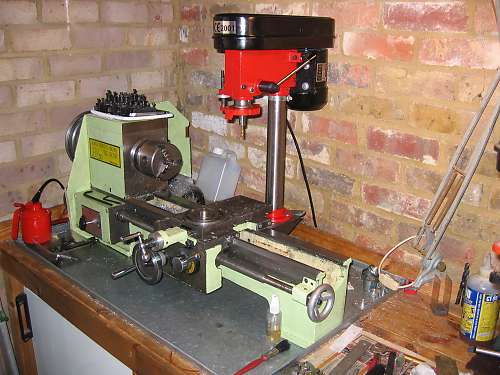
Credit: hackaday.com
When Can a Drill Press Work Like a Mill?
There are some cases where a drill press can do light milling tasks.
- Small flat surfaces: You can carefully use a drill press to flatten a small area.
- Shaping soft materials: Wood or plastic can sometimes be shaped with a drill press.
- Simple slot cutting: You may cut shallow slots if you move the workpiece slowly and carefully.
But remember, these jobs require patience and skill. The results will not be as good as a real milling machine.
Tips for Using a Drill Press for Milling-Like Work
If you decide to try milling on a drill press, follow these tips:
- Secure the workpiece well. Use clamps to keep it from moving.
- Use sharp tools. Make sure bits are in good shape.
- Go slow. Use low speeds and take small cuts.
- Check alignment. Make sure the bit is straight and tight.
- Wear safety glasses. Protect your eyes from chips and dust.

Credit: www.reddit.com
Why You Should Get a Milling Machine Instead
Even if a drill press can do some milling, a milling machine is better. Here’s why:
- More precise cuts in many directions
- Better tool holding for milling bits
- Stronger and more stable for tough jobs
- Safer to use with proper design
- Faster and smoother milling process
If you plan to do milling work often, a milling machine is a good investment. It makes your work easier and better.
Frequently Asked Questions
Can A Drill Press Handle Light Milling Tasks?
Yes, a drill press can perform light milling with proper tools. It works best on soft materials and simple shapes.
What Are The Main Differences Between A Drill Press And A Mill?
A drill press moves only vertically, while a mill moves in multiple directions. Mills offer more precision and control.
Is It Safe To Use A Drill Press As A Mill?
Using a drill press as a mill can be risky without proper setup. Secure the workpiece and use the right tools.
What Tools Are Needed To Mill On A Drill Press?
You need milling cutters or end mills designed for drill presses. A proper vise to hold the workpiece is also essential.
Conclusion
So, can a drill press be used as a mill? The answer is yes, but only for very light and simple jobs. A drill press is mainly for drilling holes. It does not have the movement or power that a mill has.
If you want to do real milling, it is best to use a milling machine. They are made for cutting and shaping material. Using a drill press as a mill can be slow, risky, and less accurate.
Still, if you have only a drill press, you can try small milling tasks. Just be careful, use the right tools, and go slow. Always remember safety first.
In the end, knowing the right tool for the job will save you time and trouble.